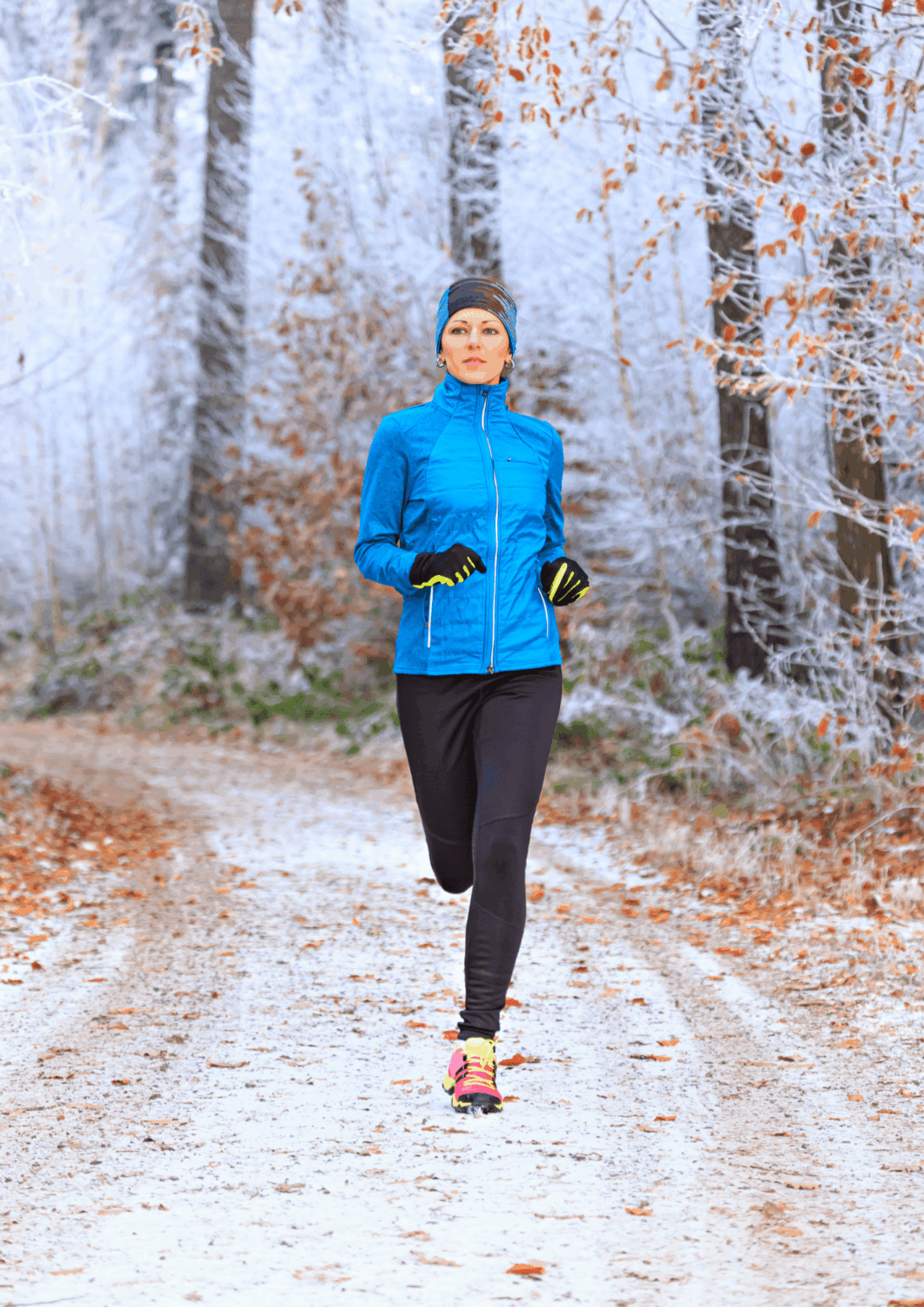
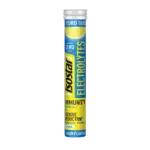
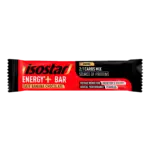
Cold exercise may feel easier than heat, but fluid and energy needs do not disappear. Sweat collects under clothing, respiratory losses continue and thirst may be blunted.
A safe winter session starts with the forecast, layers and route rather than a test of toughness. Duration and intensity should reflect surface, wind and visibility.
Key points
Use a rehearsed drinking plan because cold can mute thirst.
Dress in layers and start slightly cool rather than already sweating.
Shorten or stop for numbness, uncontrolled shivering or loss of coordination.
Why drinking is forgotten
In one controlled study, cold exposure reduced thirst sensations by as much as about 40%, including in hypohydrated participants. In another crossover trial, participants drank less in cold conditions even though body-mass loss was similar and urine output higher.
These small studies are not a prescription for everyone, but show why thirst may be incomplete feedback. On a long session, keep fluid accessible and prevent the bottle from freezing.
Fluid and energy
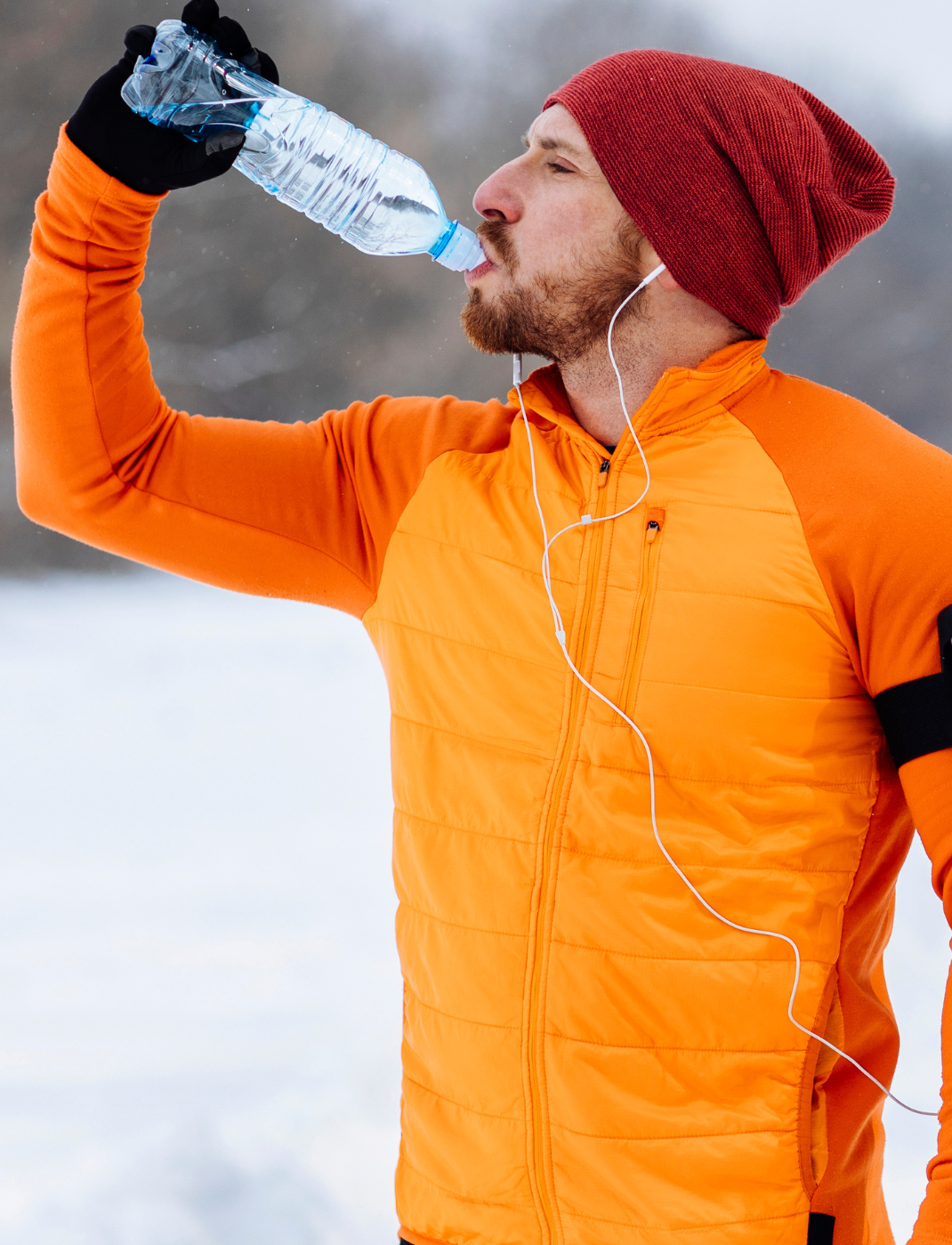
For an easy session under an hour, normal hydration before and after is often enough. For longer or harder work, use your sweat estimate and a familiar drink. An insulated bottle or warmer drink can be more practical.
Carbohydrate need follows duration and intensity, not the season. Beyond 90 minutes, carry an easy-open gel or soft bar; a firm product may become difficult to chew in cold.
Athlete drinking water during winter training
Layers, warm-up and route
A base layer moves moisture, a middle layer insulates and an outer layer blocks wind or precipitation. Cotton stays wet and cools. Protect hands, feet, ears and neck without starting overdressed and sweating heavily.
Warm up progressively and avoid maximal sprints on slippery ground. Choose a visible route, share the plan and use loops close to shelter when wind chill is severe.
When to stop
Numbness, pale or waxy skin, clumsy hands, uncontrolled shivering, slurred speech, confusion or lost coordination are warnings. Move to warmth, replace wet clothing and do not rub possibly frostbitten skin.
People with asthma, cardiovascular disease or Raynaud’s should discuss cold exercise with a clinician. Indoor training during ice, extreme wind or poor visibility is a sensible decision.
Before closing the door
Check wind, precipitation and wind-chill as well as temperature. Charge and weatherproof the phone, use lights and reflectivity, and carry spare dry gloves for a long session.
On return, remove wet layers, warm gradually and replace fluid with a normal meal. A very hot shower on numb skin is not a safe rapid-warming method. Seek medical advice if sensation or normal skin colour does not return.
Official Isostar / Nutrition & Santé image used by INTERVALS under its distribution agreement.
Author: INTERVALS editorial team. This content was localised and expanded for Baltic athletes from authorised Isostar / Nutrition & Santé material. Scientific claims were checked against the cited primary sources. Last reviewed: 21 August 2026.
Cookie settings
We use cookies to keep the site working, measure visits, and tailor marketing. Read more
Cookie settings
We use cookies to keep the site working, measure visits, and tailor marketing. Read more
Necessary cookies✓
Necessary cookies
Required for core site functionality and always enabled.
Always on
Performance
Help us understand how visitors use the site and where to improve it.
Targeting
Used for ad measurement and personalization.
Necessary cookies
Name
Provider / Scope
Description
intervals_consent
Intervals Consent
Stores the visitor consent choice and schema version.
wp_woocommerce_session_*
WooCommerce
Keeps the cart and checkout session alive between requests.
woocommerce_cart_hash
WooCommerce
Tracks cart changes so the storefront knows when fragments must refresh.
woocommerce_items_in_cart
WooCommerce
Signals whether the visitor currently has items in cart.
intervals_delivery_country
Intervals Market Switcher
Stores the visitor-selected delivery country so the storefront and checkout can preserve that choice across pages.
isl_post_login_redirect
Intervals Social Login
Temporarily stores the return URL for social login so the user can be redirected back to the requested page.
Performance
Name
Provider / Scope
Description
sbjs_*
SourceBuster / WooCommerce attribution
Stores attribution and visit-source data used for marketing and campaign analysis.
intervals_utm_*
Intervals Marketing
Stores UTM campaign parameters for attribution, campaign analysis, and reporting.
intervals_first_visit
Intervals Marketing
Stores first-visit timestamp for attribution/reporting.
intervals_referrer
Intervals Marketing
Stores the referring source for attribution and reporting.
intervals_traffic_source
Intervals Marketing
Stores traffic source attribution.
intervals_landing_page
Intervals Marketing
Stores the landing page used for attribution.
intervals_engagement
Intervals Marketing
SessionStorage record that temporarily stores engagement metrics such as page count, scroll depth, and interactions.
intervals_viewed_products
Intervals Marketing
SessionStorage record that stores the list of products viewed in the session for engagement and attribution analysis.
_ga / _ga_*
Google Analytics 4
Distinguishes visitors and helps build aggregate site-usage reports.
Targeting
Name
Provider / Scope
Description
_fbp
Meta / Facebook Pixel
Advertising attribution and audience measurement.
_fbc
Meta / Facebook Pixel
Advertising click attribution.
_gcl_au
Google Ads
Advertising conversion measurement.
IDE
Google Ads / DoubleClick
Third-party ad personalization and conversion attribution.
test_cookie
Google Ads / DoubleClick
Checks whether the browser supports setting ad-platform cookies.