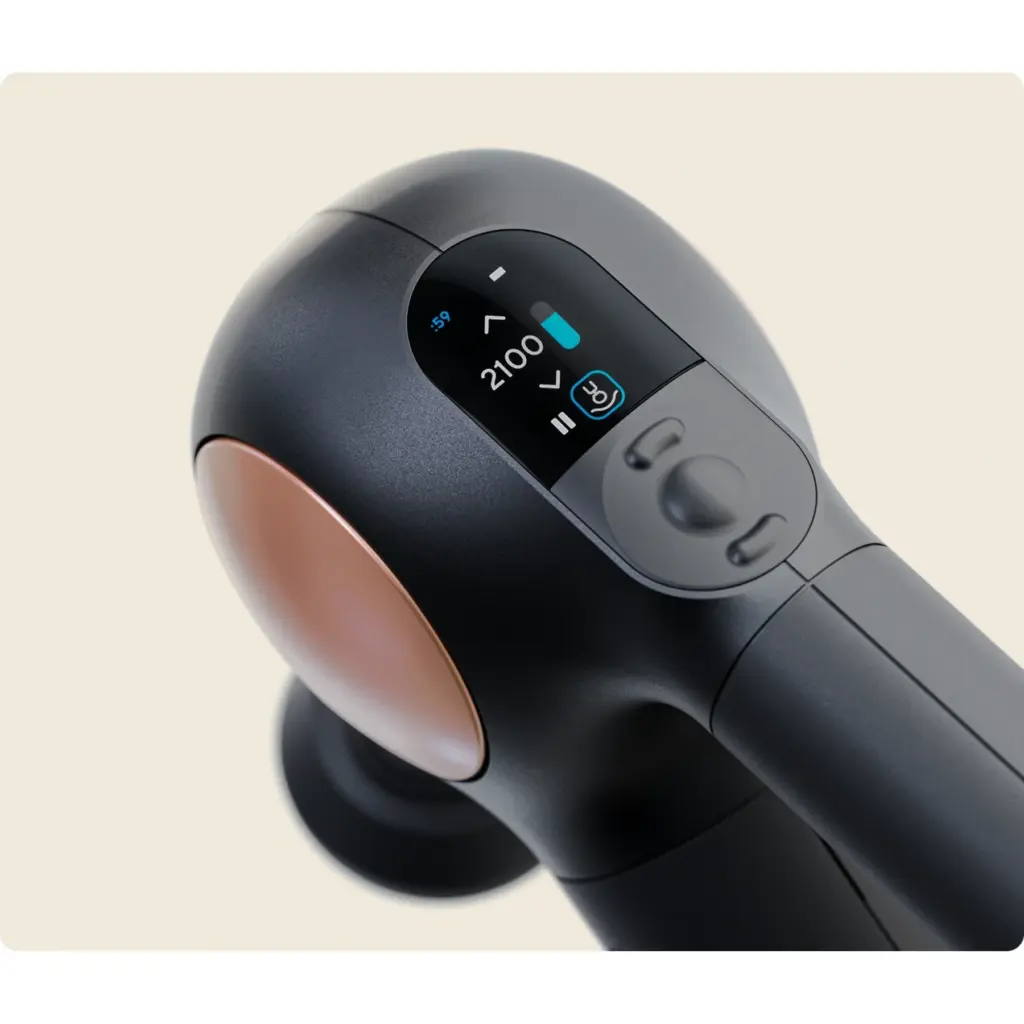
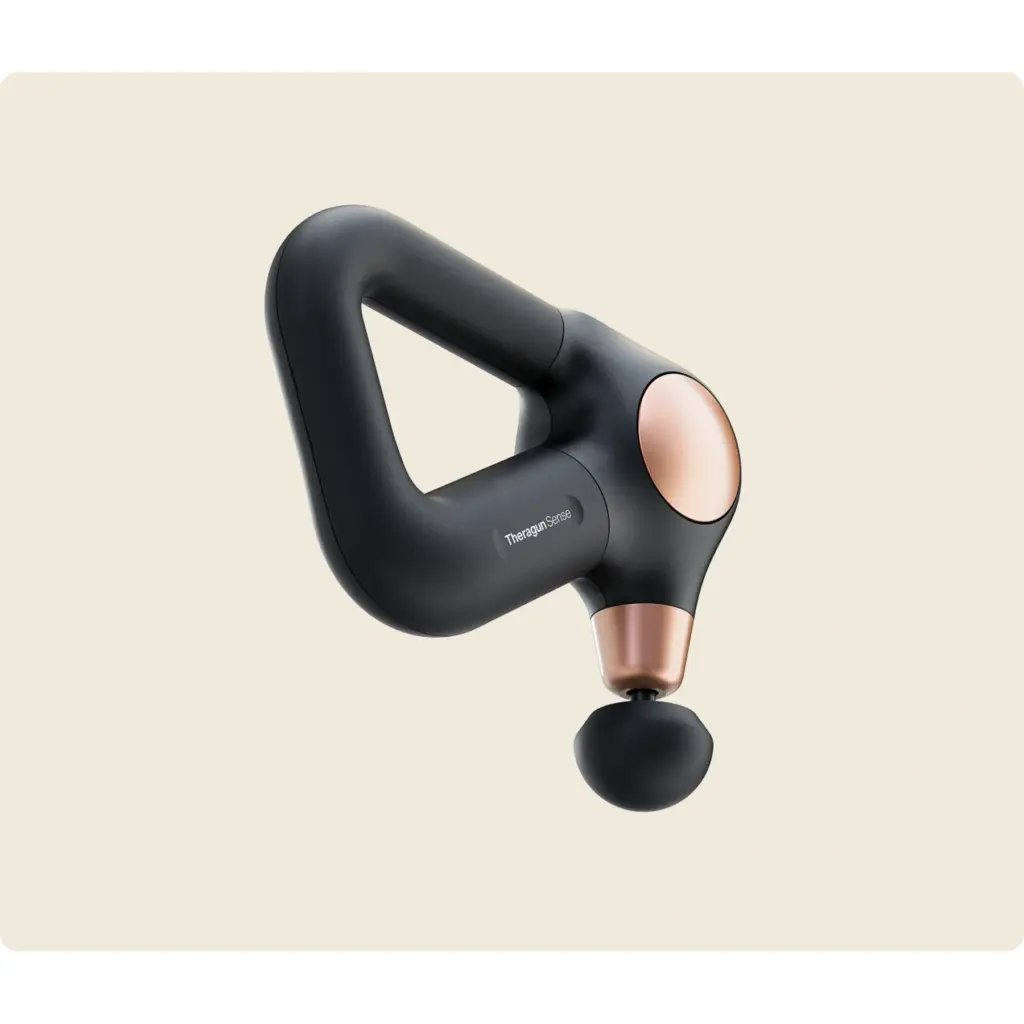
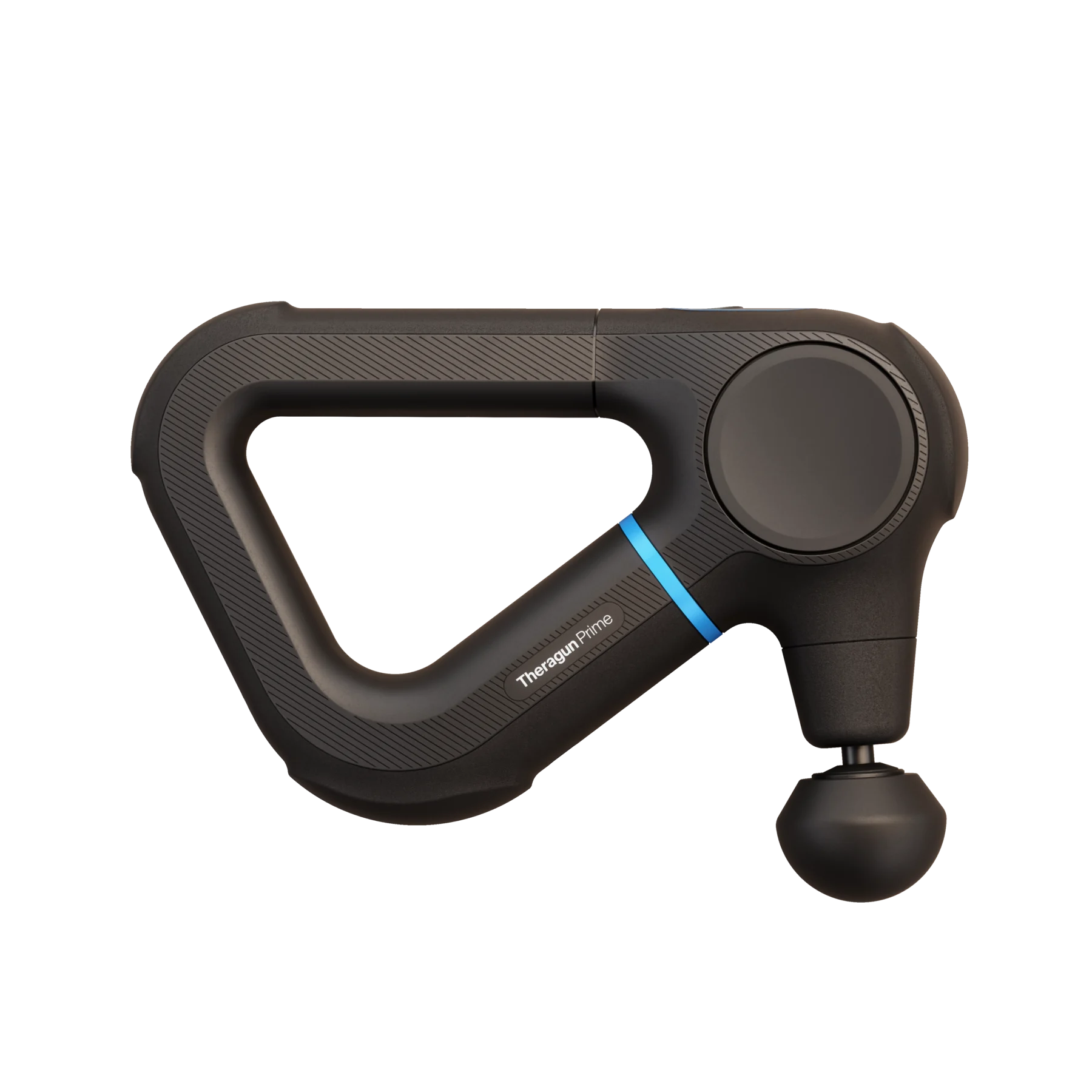
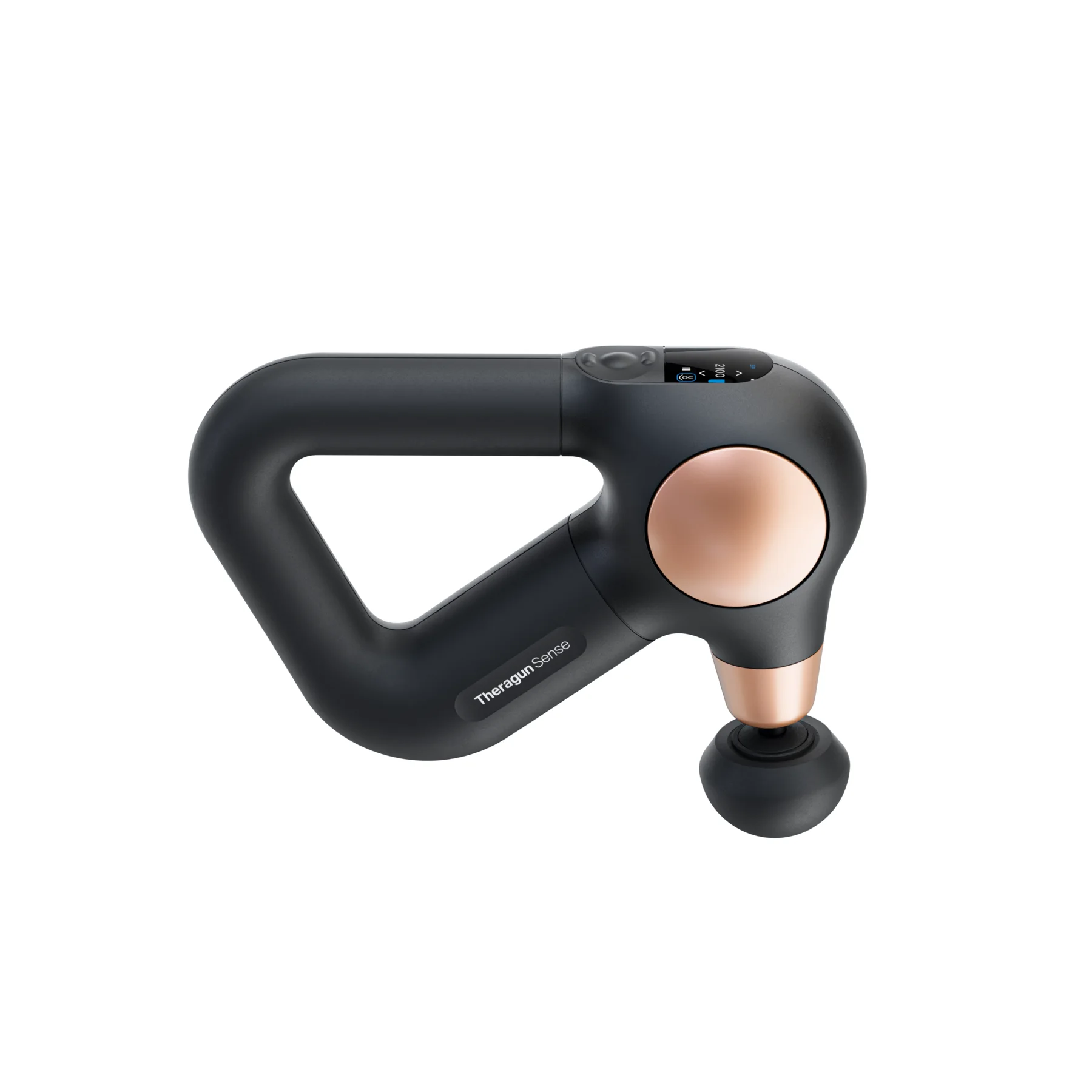
Official Therabody product image, used by INTERVALS for product presentation.
Percussive massage is often discussed as if one device could accelerate recovery, prevent injury and improve performance. Primary research supports a narrower conclusion.
Small studies suggest short-term changes in range of motion or perceived soreness. That is useful, but it is not evidence of faster tissue healing or a guaranteed response.
Key points
The likely benefit is usually short-term.
Perception and objective performance are different outcomes.
Samples are small and protocols vary.
Mobility: the clearest short-term signal
Randomised studies report that a brief session may improve range of motion without a major immediate strength penalty. Measurements are commonly taken soon afterwards in small groups. Use the new range in task-specific movement; the device does not teach control.
DOMS: symptom change, not a cure
A 2025 randomised trial of 30 men compared percussive protocols after exercise-induced muscle damage. Some soreness and function outcomes improved at selected time points, but the small, specific sample is not a universal prescription.
Official Therabody product image, used by INTERVALS for product presentation.
What remains unproven
prevention of sports injury;
faster muscle or tendon healing;
greater benefit from greater pressure;
automatic transfer of one protocol to every device and athlete.
Use evidence in everyday practice
Choose one goal and measure it. Before training, check whether movement feels freer after a short session. After training, check comfort. If there is no benefit or symptoms worsen, reduce intensity or skip it.
Official Therabody product image, used by INTERVALS for product presentation.
Author: INTERVALS editorial team. This is original INTERVALS material; manufacturer content was used only to identify topics and verify product facts. Medical claims were checked against the primary sources listed below. Last reviewed: 21 August 2026.
Cookie settings
We use cookies to keep the site working, measure visits, and tailor marketing. Read more
Cookie settings
We use cookies to keep the site working, measure visits, and tailor marketing. Read more
Necessary cookies✓
Necessary cookies
Required for core site functionality and always enabled.
Always on
Performance
Help us understand how visitors use the site and where to improve it.
Targeting
Used for ad measurement and personalization.
Necessary cookies
Name
Provider / Scope
Description
intervals_consent
Intervals Consent
Stores the visitor consent choice and schema version.
wp_woocommerce_session_*
WooCommerce
Keeps the cart and checkout session alive between requests.
woocommerce_cart_hash
WooCommerce
Tracks cart changes so the storefront knows when fragments must refresh.
woocommerce_items_in_cart
WooCommerce
Signals whether the visitor currently has items in cart.
intervals_delivery_country
Intervals Market Switcher
Stores the visitor-selected delivery country so the storefront and checkout can preserve that choice across pages.
isl_post_login_redirect
Intervals Social Login
Temporarily stores the return URL for social login so the user can be redirected back to the requested page.
Performance
Name
Provider / Scope
Description
sbjs_*
SourceBuster / WooCommerce attribution
Stores attribution and visit-source data used for marketing and campaign analysis.
intervals_utm_*
Intervals Marketing
Stores UTM campaign parameters for attribution, campaign analysis, and reporting.
intervals_first_visit
Intervals Marketing
Stores first-visit timestamp for attribution/reporting.
intervals_referrer
Intervals Marketing
Stores the referring source for attribution and reporting.
intervals_traffic_source
Intervals Marketing
Stores traffic source attribution.
intervals_landing_page
Intervals Marketing
Stores the landing page used for attribution.
intervals_engagement
Intervals Marketing
SessionStorage record that temporarily stores engagement metrics such as page count, scroll depth, and interactions.
intervals_viewed_products
Intervals Marketing
SessionStorage record that stores the list of products viewed in the session for engagement and attribution analysis.
_ga / _ga_*
Google Analytics 4
Distinguishes visitors and helps build aggregate site-usage reports.
Targeting
Name
Provider / Scope
Description
_fbp
Meta / Facebook Pixel
Advertising attribution and audience measurement.
_fbc
Meta / Facebook Pixel
Advertising click attribution.
_gcl_au
Google Ads
Advertising conversion measurement.
IDE
Google Ads / DoubleClick
Third-party ad personalization and conversion attribution.
test_cookie
Google Ads / DoubleClick
Checks whether the browser supports setting ad-platform cookies.