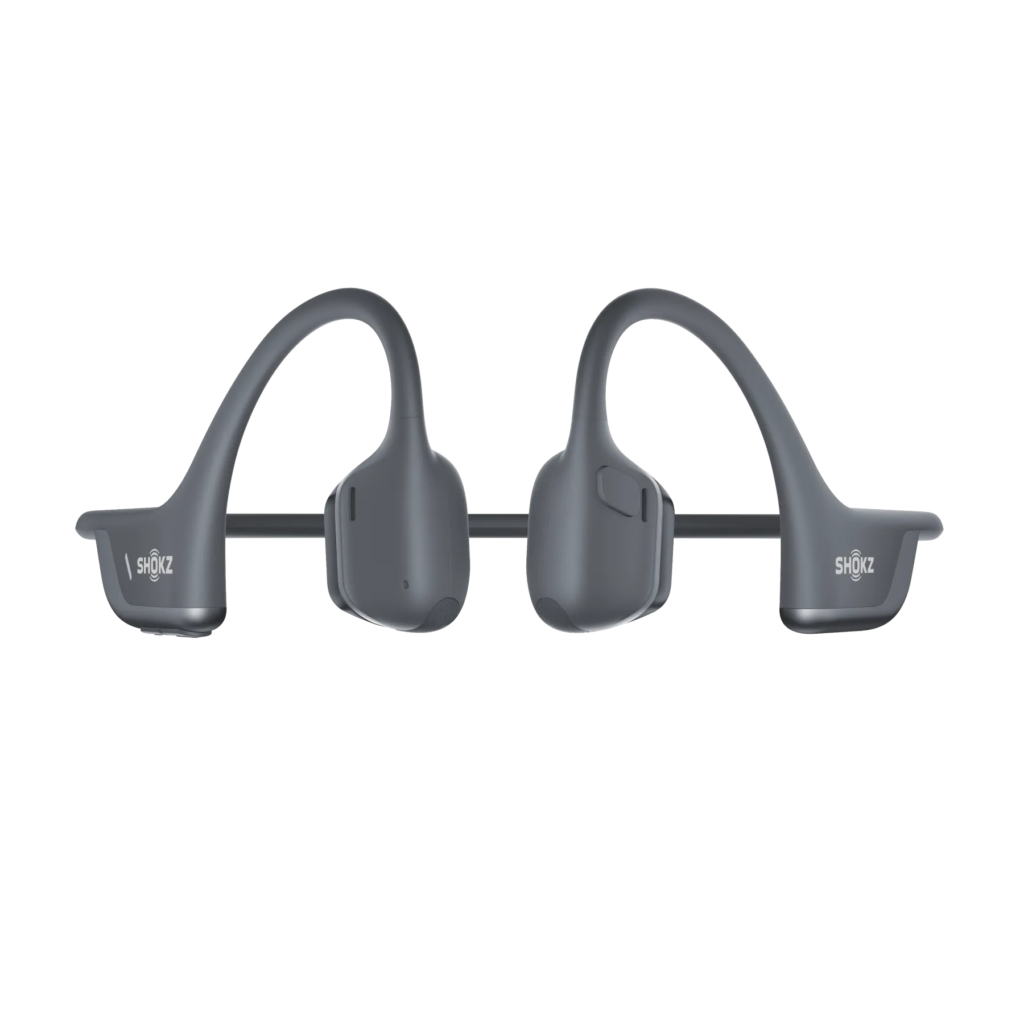
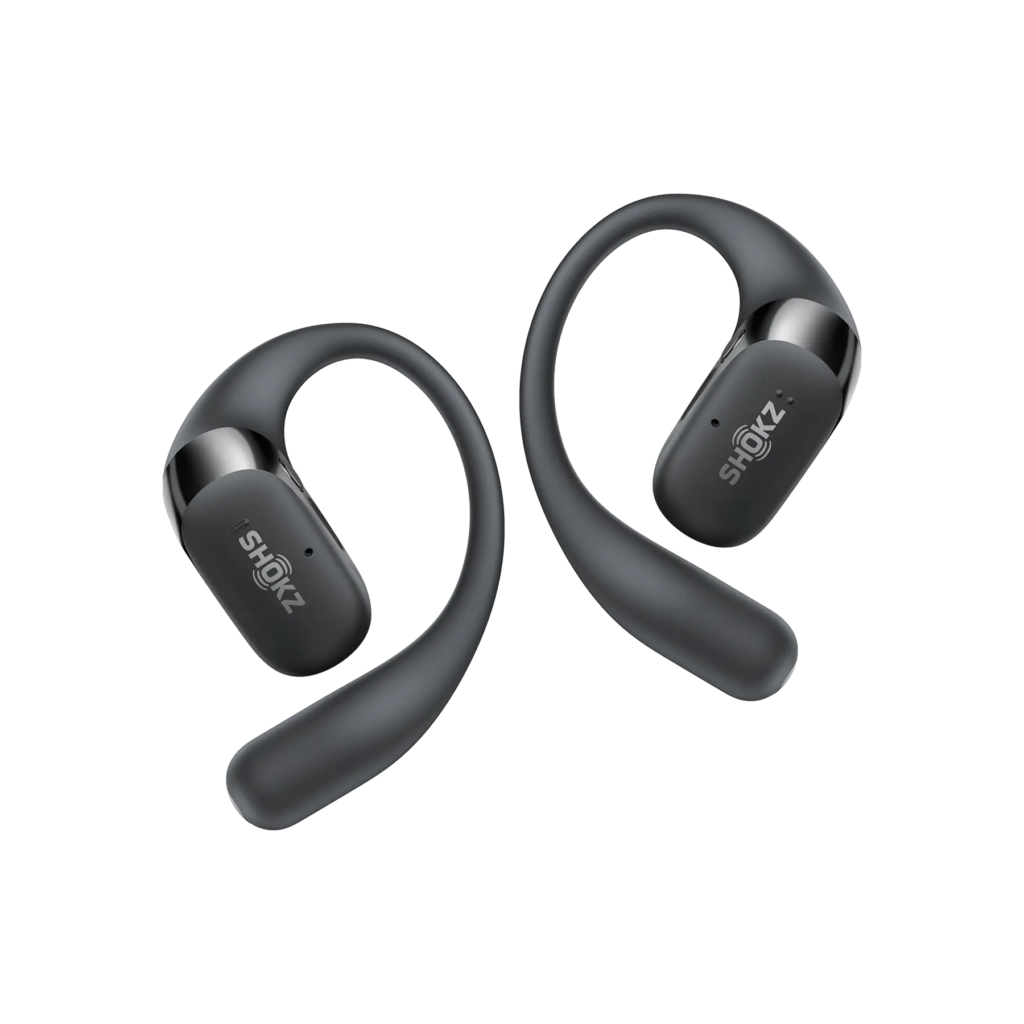
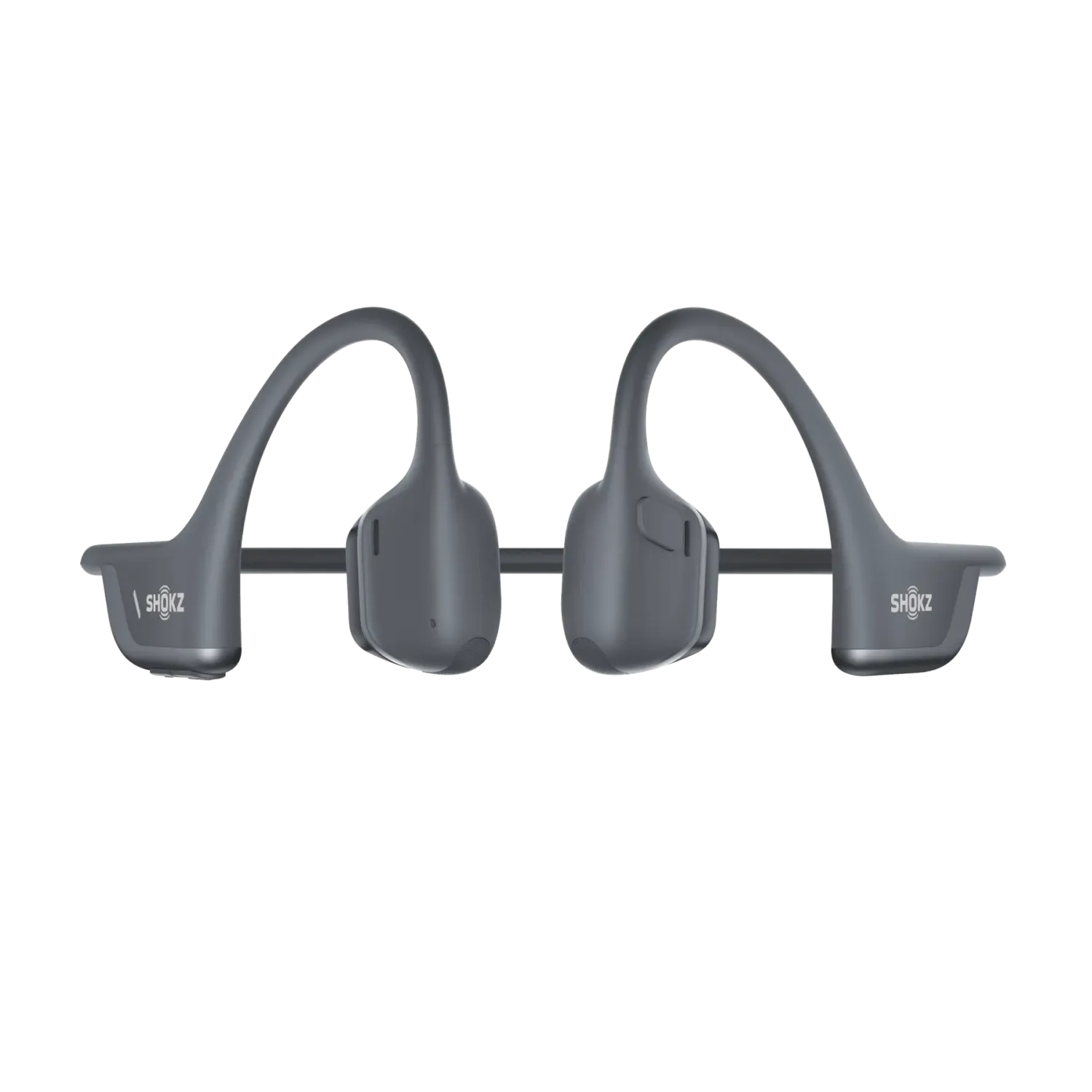
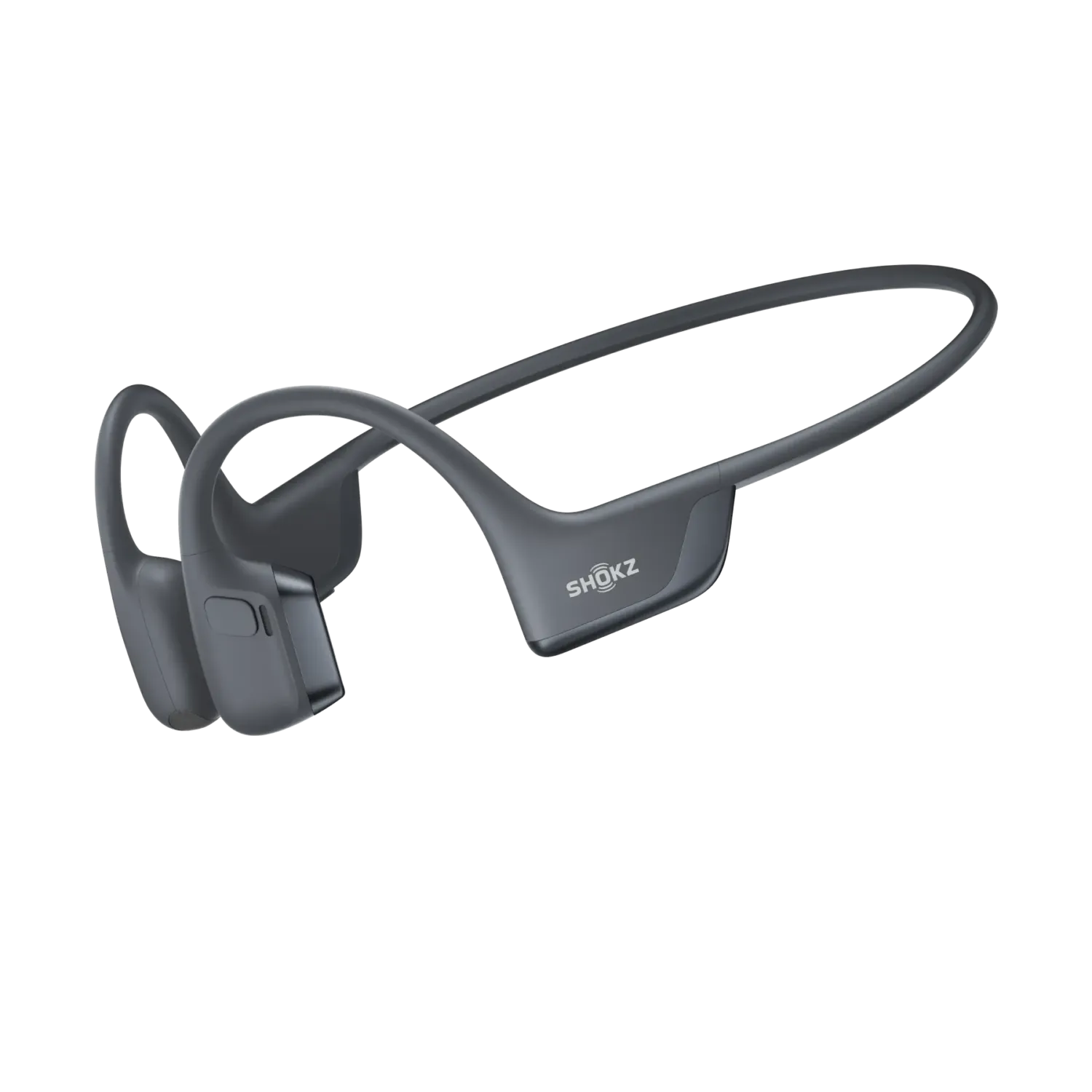
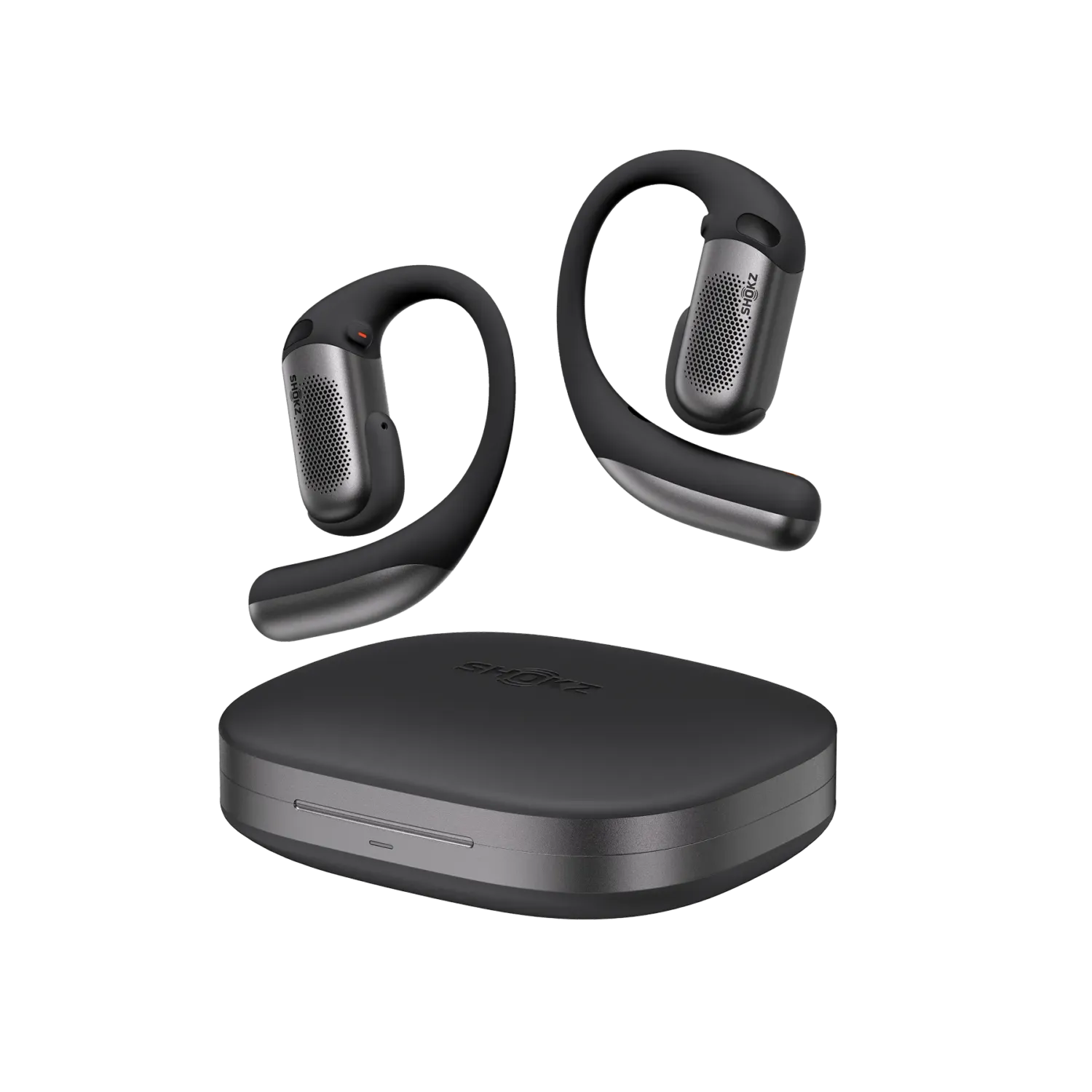
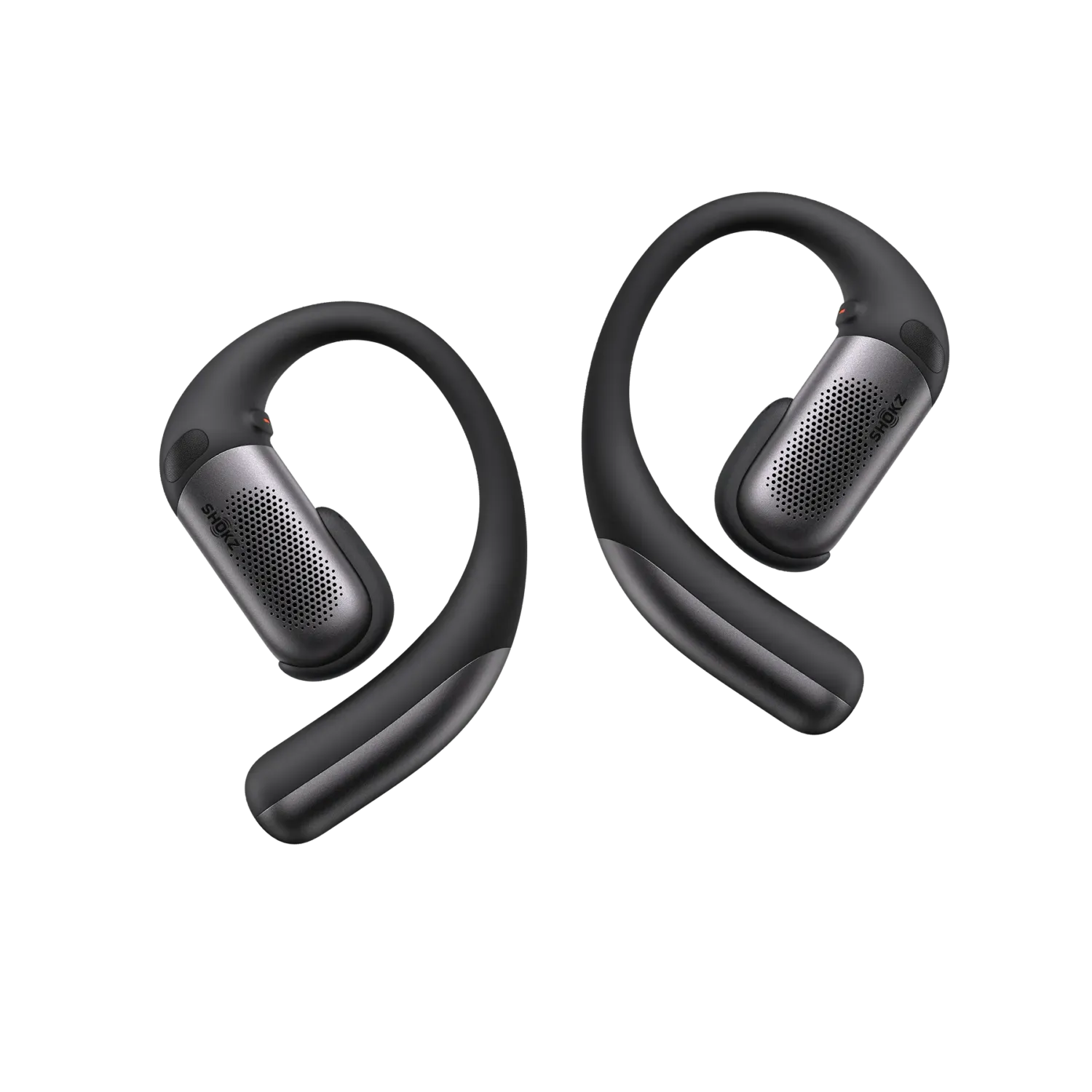
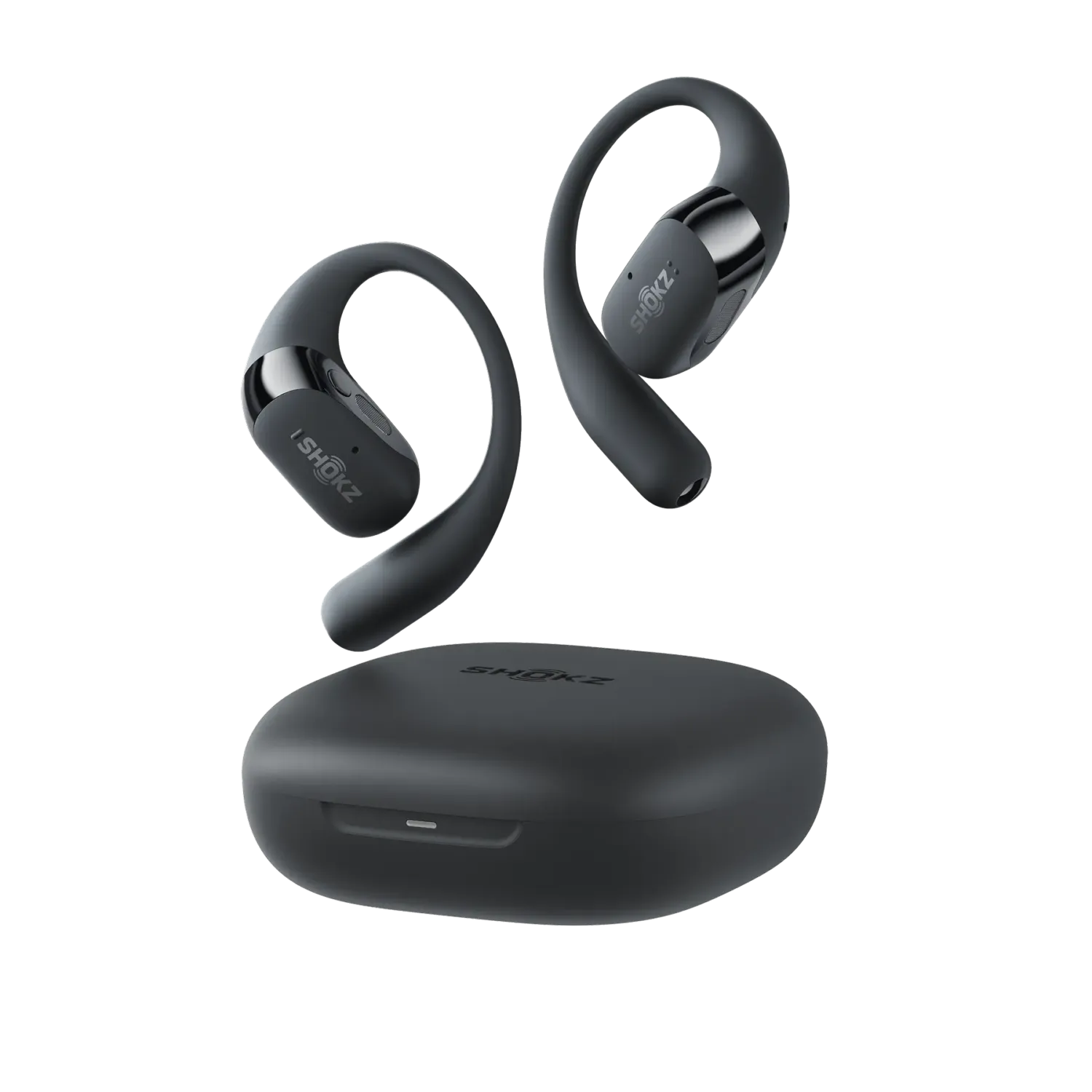
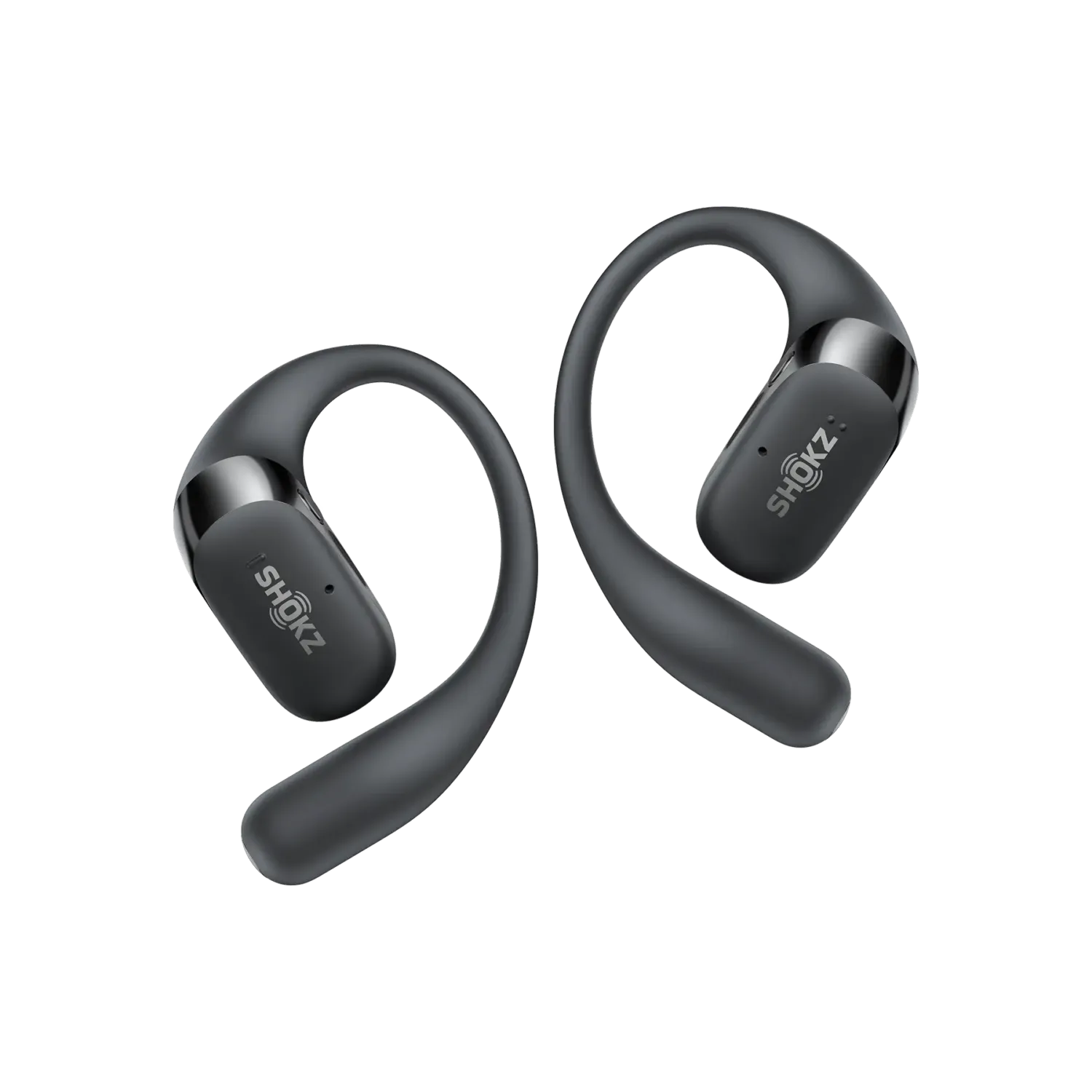
“Open-ear” means that the ear canal is not plugged. It does not specify how sound is transmitted. Shokz makes both bone-conduction and air-conduction models, and both can use an open-ear design.
This distinction avoids a common error: OpenFit Pro and OpenFit 2+ are not bone-conduction headphones.
Quick answer
Bone conduction sends vibration through the temporal bone toward the inner ear.
Air conduction directs sound through the air toward an unsealed ear canal.
An open ear can admit environmental sound, but volume and attention still determine awareness.
Bone conduction: OpenRun and OpenSwim
Bone-conduction transducers rest near the cheekbone and create mechanical vibration that reaches the inner ear without following the usual eardrum route. OpenRun Pro 2 uses it for running and sport; OpenSwim Pro also adapts it to swimming.
A free ear canal and stable neckband are practical advantages. Some users feel vibration at high volume, and comfort remains individual.
Air conduction: OpenFit
An OpenFit speaker sits outside the ear canal and directs sound through the air toward the ear. It is closer to a conventional loudspeaker than bone conduction. OpenFit Pro, OpenFit 2 and OpenFit 2+ belong here.
The design supports independent left and right earbuds and directional sound. Because the ear is not sealed, an open model cannot isolate a very noisy environment like a closed or in-ear design.
Shokz product image from the INTERVALS catalogue.
What “hearing your surroundings” really means
An open canal allows environmental sound to reach the ear, but loud playback can still mask it. Reduce volume in traffic, stay attentive and follow event and road rules.
Choose OpenRun for a stable sports neckband, OpenFit for separate daily earbuds, and only a properly rated model for swimming.
Author: INTERVALS editorial team. An original comparison based on INTERVALS product data and official Shokz documentation; it is not a translation of a manufacturer article. Facts last checked: 21 August 2026.
Cookie settings
We use cookies to keep the site working, measure visits, and tailor marketing. Read more
Cookie settings
We use cookies to keep the site working, measure visits, and tailor marketing. Read more
Necessary cookies✓
Necessary cookies
Required for core site functionality and always enabled.
Always on
Performance
Help us understand how visitors use the site and where to improve it.
Targeting
Used for ad measurement and personalization.
Necessary cookies
Name
Provider / Scope
Description
intervals_consent
Intervals Consent
Stores the visitor consent choice and schema version.
wp_woocommerce_session_*
WooCommerce
Keeps the cart and checkout session alive between requests.
woocommerce_cart_hash
WooCommerce
Tracks cart changes so the storefront knows when fragments must refresh.
woocommerce_items_in_cart
WooCommerce
Signals whether the visitor currently has items in cart.
intervals_delivery_country
Intervals Market Switcher
Stores the visitor-selected delivery country so the storefront and checkout can preserve that choice across pages.
isl_post_login_redirect
Intervals Social Login
Temporarily stores the return URL for social login so the user can be redirected back to the requested page.
Performance
Name
Provider / Scope
Description
sbjs_*
SourceBuster / WooCommerce attribution
Stores attribution and visit-source data used for marketing and campaign analysis.
intervals_utm_*
Intervals Marketing
Stores UTM campaign parameters for attribution, campaign analysis, and reporting.
intervals_first_visit
Intervals Marketing
Stores first-visit timestamp for attribution/reporting.
intervals_referrer
Intervals Marketing
Stores the referring source for attribution and reporting.
intervals_traffic_source
Intervals Marketing
Stores traffic source attribution.
intervals_landing_page
Intervals Marketing
Stores the landing page used for attribution.
intervals_engagement
Intervals Marketing
SessionStorage record that temporarily stores engagement metrics such as page count, scroll depth, and interactions.
intervals_viewed_products
Intervals Marketing
SessionStorage record that stores the list of products viewed in the session for engagement and attribution analysis.
_ga / _ga_*
Google Analytics 4
Distinguishes visitors and helps build aggregate site-usage reports.
Targeting
Name
Provider / Scope
Description
_fbp
Meta / Facebook Pixel
Advertising attribution and audience measurement.
_fbc
Meta / Facebook Pixel
Advertising click attribution.
_gcl_au
Google Ads
Advertising conversion measurement.
IDE
Google Ads / DoubleClick
Third-party ad personalization and conversion attribution.
test_cookie
Google Ads / DoubleClick
Checks whether the browser supports setting ad-platform cookies.