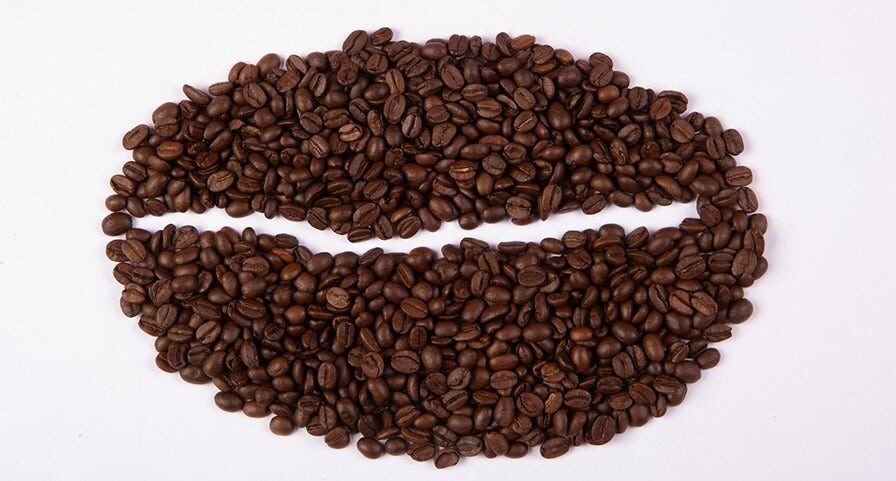
Caffeine can reduce perceived effort and improve endurance performance for some athletes, but the effect is not guaranteed. Habit, dose, anxiety, sleep, genetics and event time all influence the response.
More is not automatically better. Start low, test during training and count coffee, gels, drinks and capsules together.
Key points
Start near 1–3 mg/kg rather than with a large dose.
Test at race intensity and the same time of day as the event.
For a late start, lost sleep may outweigh a small performance benefit.
What controlled trials show
In controlled cycling and running studies, caffeine extended time to exhaustion or improved a distance trial in some groups. Most experiments are small, protocols differ and other studies find no benefit, so a percentage from one trial cannot be promised to everyone.
Caffeine does not create glycogen and cannot replace training or fuelling. Its main effects involve the central nervous system and perceived effort.
Dose and timing
A practical starting dose is 1–3 mg/kg around 45–60 minutes before the key effort. For a 70 kg athlete that is 70–210 mg. Some respond to less; larger doses more often cause anxiety, palpitations and gastrointestinal discomfort.
A late-race caffeinated gel still works gradually. Read labels carefully: two gels, coffee and an energy drink can add up without being noticed.
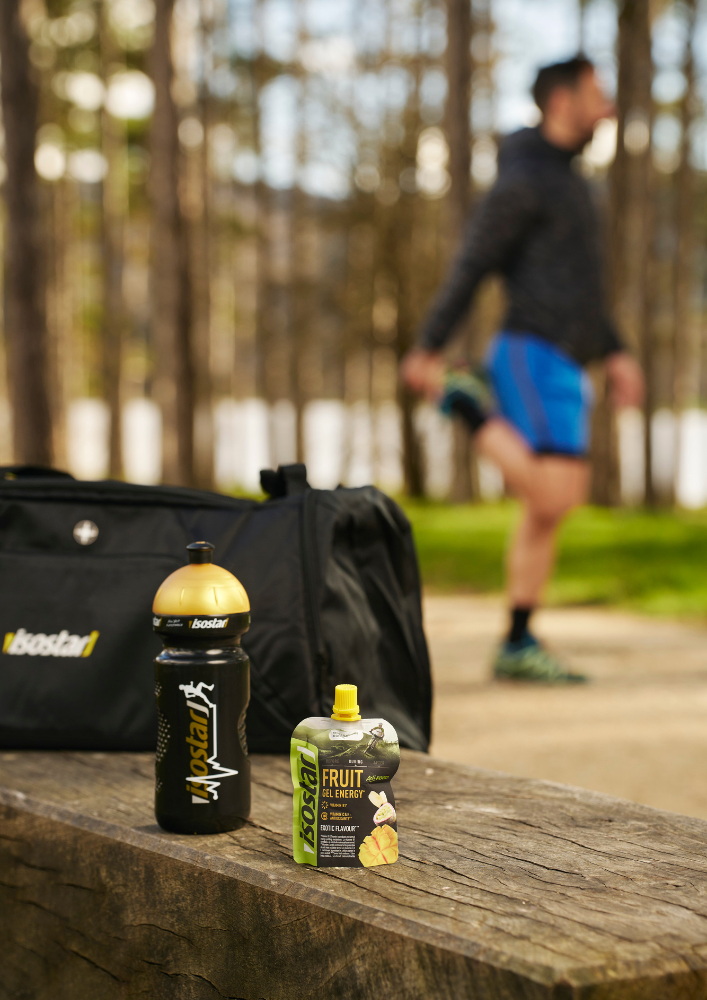
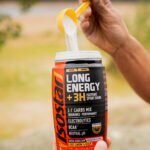
Isostar bottle and energy product beside a training route
Sleep and adverse effects
In a controlled sleep trial, 400 mg caffeine impaired sleep even when taken six hours before bed. Sports doses may be lower, but evening use can still compromise recovery. A non-caffeinated option may be smarter for a late event.
Stop if marked tremor, anxiety, dizziness, chest pain or irregular heartbeat occurs; severe symptoms require medical help.
A safe test protocol
Record habitual daily caffeine.
Choose a low dose and familiar product.
Test in a controlled race-pace session.
Assess performance, stomach, heart rate, anxiety and that night’s sleep.
If there is no benefit, a larger dose is not mandatory.
Seek medical advice in pregnancy, heart rhythm disorders, uncontrolled blood pressure, anxiety disorders, medication use or for minors.
Keep a caffeine log
Write the exact time and milligrams from every source rather than “two coffees”. Add body mass, session start, food, perceived effort and time to fall asleep. Repeat the same protocol at least twice.
An improved session with worse sleep is not automatically a successful experiment. During a multi-day event or hard training block, next-day recovery may matter more than a small immediate gain. Choose the lowest dose with a clear benefit and no meaningful adverse effect.
Official Isostar / Nutrition & Santé image used by INTERVALS under its distribution agreement.
Author: INTERVALS editorial team. This content was localised and expanded for Baltic athletes from authorised Isostar / Nutrition & Santé material. Scientific claims were checked against the cited primary sources. Last reviewed: 21 August 2026.
Cookie settings
We use cookies to keep the site working, measure visits, and tailor marketing. Read more
Cookie settings
We use cookies to keep the site working, measure visits, and tailor marketing. Read more
Necessary cookies✓
Necessary cookies
Required for core site functionality and always enabled.
Always on
Performance
Help us understand how visitors use the site and where to improve it.
Targeting
Used for ad measurement and personalization.
Necessary cookies
Name
Provider / Scope
Description
intervals_consent
Intervals Consent
Stores the visitor consent choice and schema version.
wp_woocommerce_session_*
WooCommerce
Keeps the cart and checkout session alive between requests.
woocommerce_cart_hash
WooCommerce
Tracks cart changes so the storefront knows when fragments must refresh.
woocommerce_items_in_cart
WooCommerce
Signals whether the visitor currently has items in cart.
intervals_delivery_country
Intervals Market Switcher
Stores the visitor-selected delivery country so the storefront and checkout can preserve that choice across pages.
isl_post_login_redirect
Intervals Social Login
Temporarily stores the return URL for social login so the user can be redirected back to the requested page.
Performance
Name
Provider / Scope
Description
sbjs_*
SourceBuster / WooCommerce attribution
Stores attribution and visit-source data used for marketing and campaign analysis.
intervals_utm_*
Intervals Marketing
Stores UTM campaign parameters for attribution, campaign analysis, and reporting.
intervals_first_visit
Intervals Marketing
Stores first-visit timestamp for attribution/reporting.
intervals_referrer
Intervals Marketing
Stores the referring source for attribution and reporting.
intervals_traffic_source
Intervals Marketing
Stores traffic source attribution.
intervals_landing_page
Intervals Marketing
Stores the landing page used for attribution.
intervals_engagement
Intervals Marketing
SessionStorage record that temporarily stores engagement metrics such as page count, scroll depth, and interactions.
intervals_viewed_products
Intervals Marketing
SessionStorage record that stores the list of products viewed in the session for engagement and attribution analysis.
_ga / _ga_*
Google Analytics 4
Distinguishes visitors and helps build aggregate site-usage reports.
Targeting
Name
Provider / Scope
Description
_fbp
Meta / Facebook Pixel
Advertising attribution and audience measurement.
_fbc
Meta / Facebook Pixel
Advertising click attribution.
_gcl_au
Google Ads
Advertising conversion measurement.
IDE
Google Ads / DoubleClick
Third-party ad personalization and conversion attribution.
test_cookie
Google Ads / DoubleClick
Checks whether the browser supports setting ad-platform cookies.